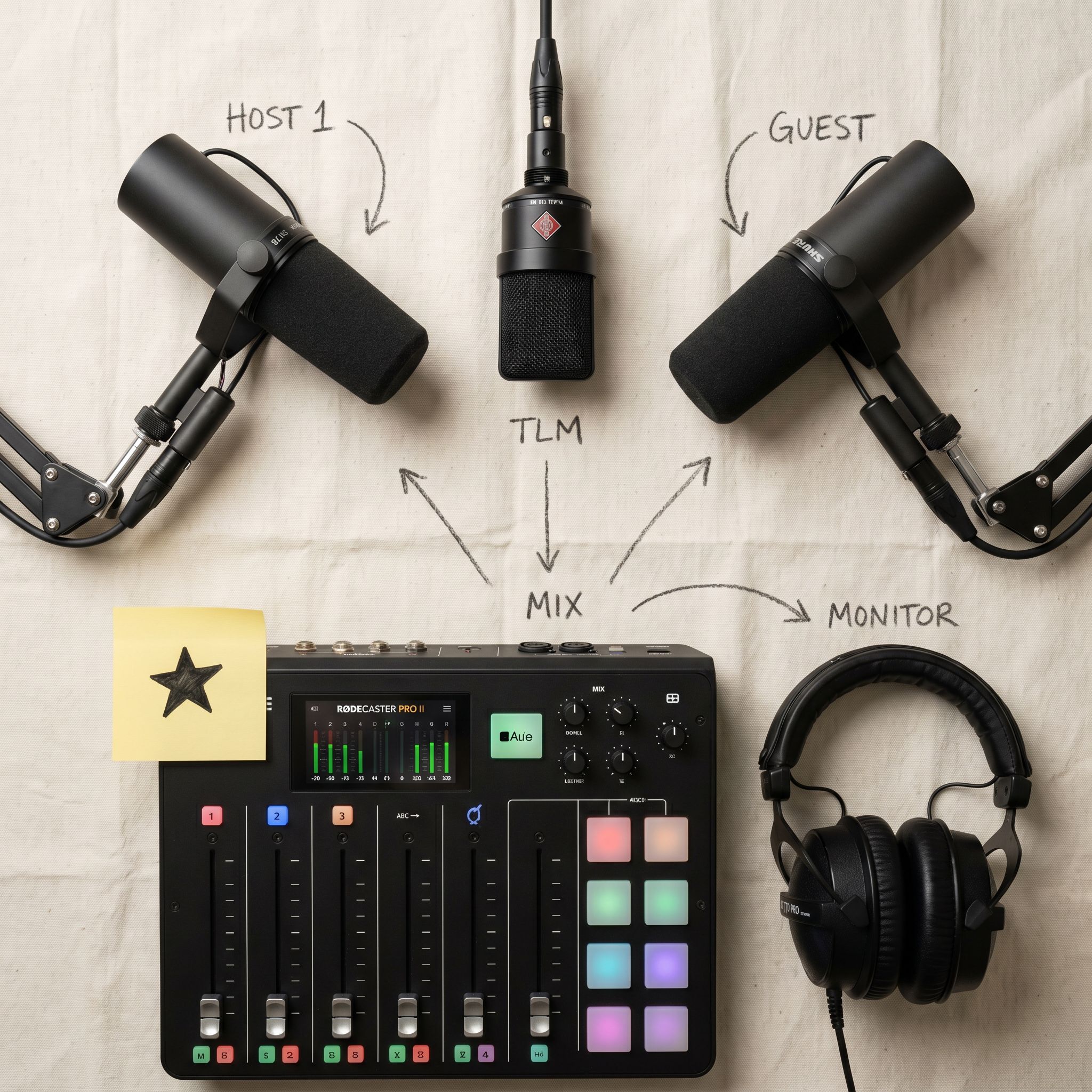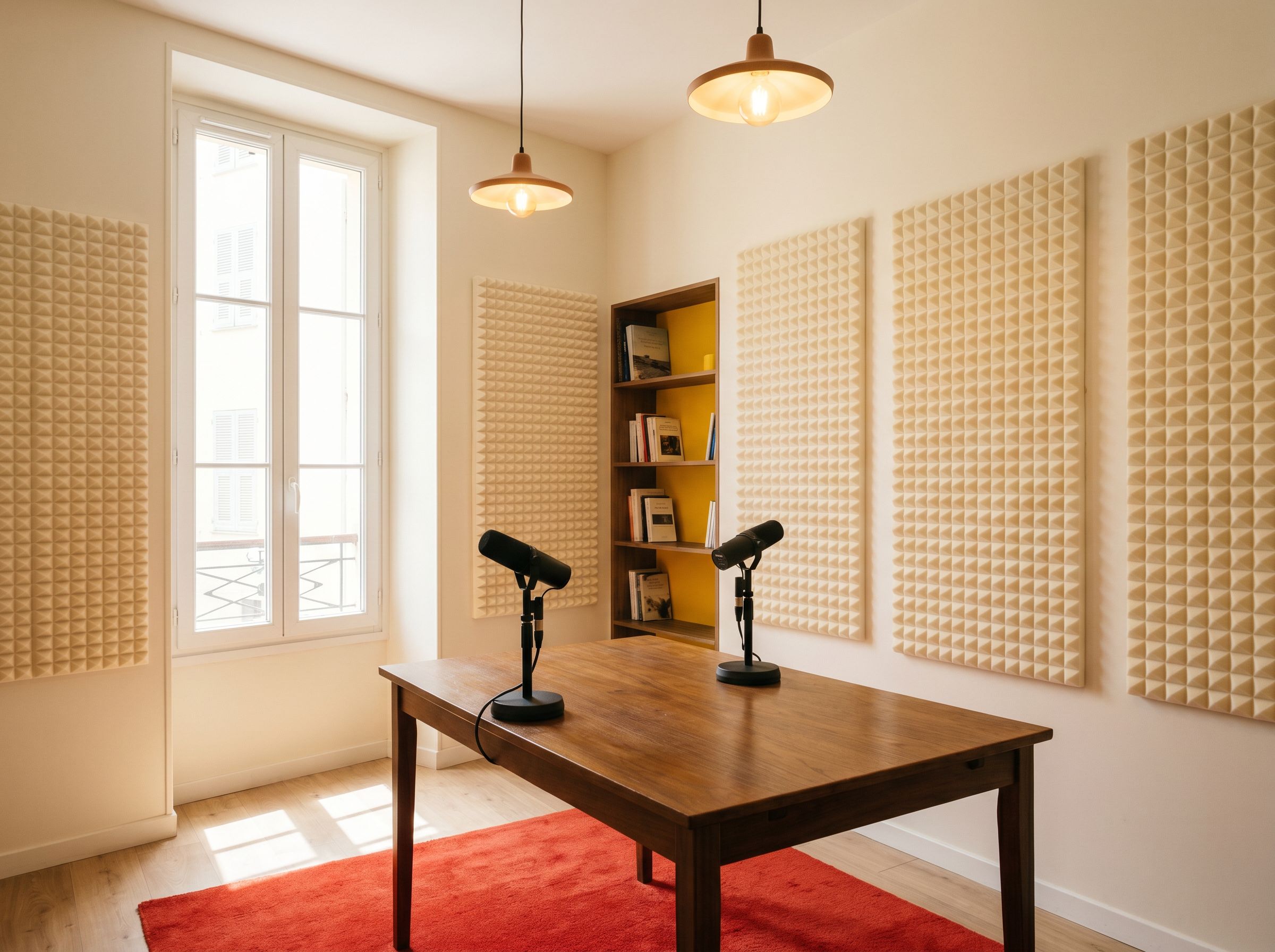
A €400 home studio is plenty for your first ten episodes. Beyond that, the calculation shifts: it is no longer about audio quality, it's about time wasted. Here's how I know when a client has crossed the line.
What your home studio does well (really)
Let's be honest. A properly assembled home setup today produces sound that 95% of listeners can't tell apart from a pro studio on first listen. A Shure MV7+ in front of a carpeted wall is serious. Don't let anyone tell you otherwise to sell you a premature upgrade.
Home studio wins on three points: one-time cost (not per-session), available 24/7, and lets you experiment without pressure.
What it does poorly, but no one admits
Six points always trip people up, no matter how good the gear:
- Ambient noise. A garbage truck, a dog, a neighbour drilling. You lose 20 minutes restarting.
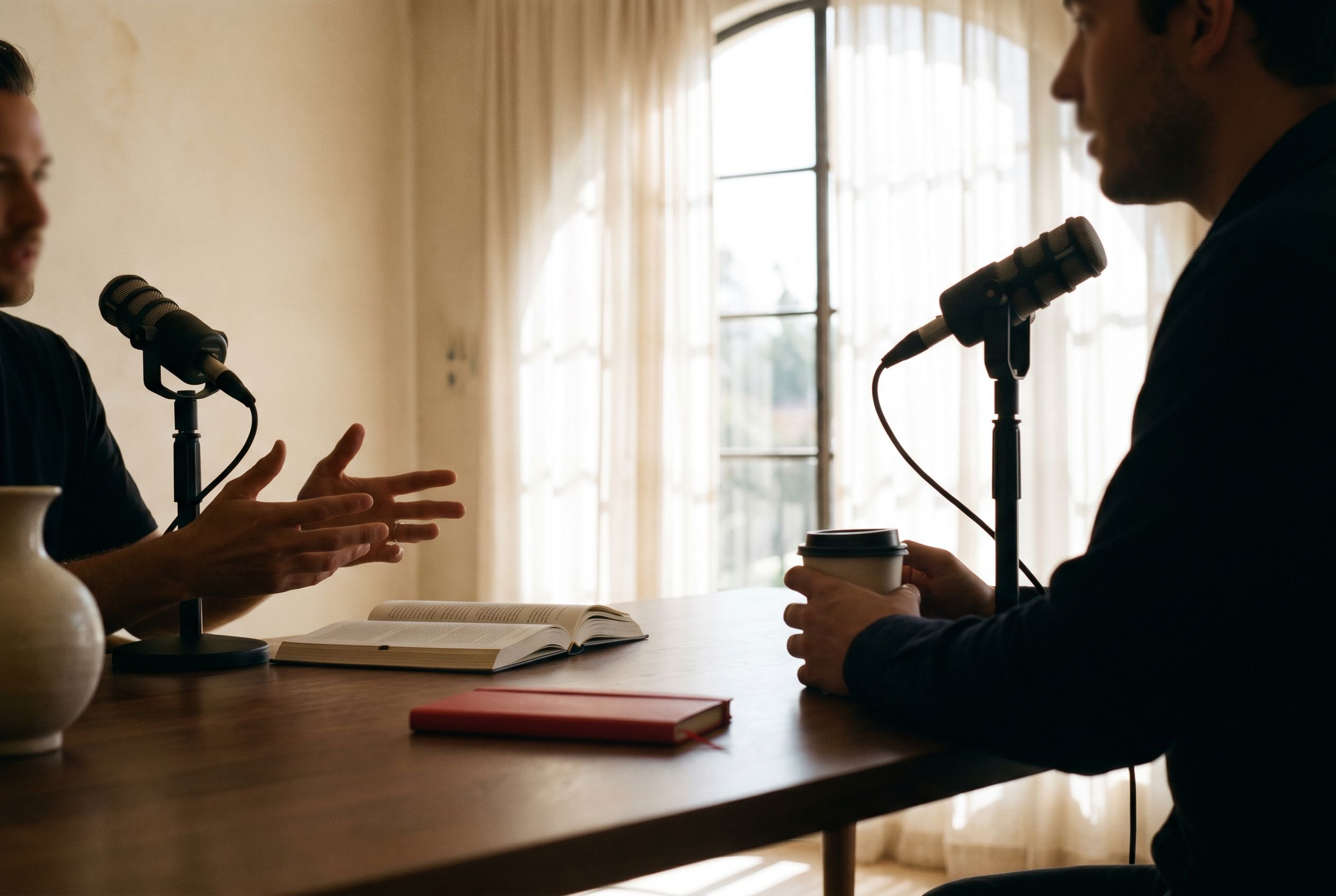
- The uncomfortable guest. An apartment isn't a pro setting. Senior executives don't love sitting in your kitchen.
- Subtle room echo. Hard to remove in the edit. Detectable to an untrained ear.
- Edit time creep. Three hours on a 40-minute episode is the home-studio norm. One hour in a pro studio with an engineer.
- Video, if you do it. Natural light that shifts, background behind you, improvised framing. On video, it shows immediately.
- The ceiling effect. Stalling at 1,000 listens per episode without knowing why. Often it's listeners dropping in the first seconds because the voice "sounds off".
The five signals that say: it's time
1. You re-record more than once a month due to outside noise
Time-cost outweighs studio session cost within three months. Simple maths.
2. You want to attack YouTube
Video needs lights + multi-cam + broadcast sound. You can DIY it, but the visual quality jump between a home studio and a pro studio is immediate.
3. Your guests start being "busy" at your address
No one will tell you straight. But inviting the CEO of a €50M company up four floors with no lift is asking too much.
4. You have 20+ episodes shipped and audience is flat
Content probably isn't the problem. You would have felt it earlier. Production needs to step up a notch.
5. You're being paid for this podcast (sponsor, employer, brand)
At this stage, the studio becomes an operational cost like any other. And the sponsoring brand expects a quality level.
The best mix: home + studio
Most of our regular clients don't drop their home studio. They use it for short solo episodes, intros, ad-reads, trials. The pro studio comes in for major guests, video episodes, batch sessions where we record four episodes in a single day.
Across the year, it costs less than going pro every episode, and is far better quality than home all year. That's the mix I recommend to 80% of serious podcasters who come through our studio.
A podcast that lasts two years rarely uses a single setup. It evolves with its audience. The trap is believing you need to do everything the same way from episode one.
In short
- Launch with a home studio. Your first ten episodes can be recorded on €400 of gear.
- Watch the signals: noise, guests, video, edit time, sponsors.
- When two signals turn on simultaneously, that's the time to try a studio session.
- The goal isn't to replace your home setup. It is to complement it.
To discuss your case in five minutes on WhatsApp, we're here. First conversation is free, whether we end up working together or not.
Not ready to come into the studio? We can bring it to you with an on-location setup, or you can rent the gear and run it yourself. If the room you want is a boat or a villa rather than an office, that is its own setup: the yacht and villa content studio. All of them, side by side, are on the services overview.